
Single-cell purification
CELLNETTA Application Case Studies
The extraction of single-cells from cell suspensions is very common in cell processing. In these situations, the percentage of single cells (purity) and cell damage affect the outcome of subsequent processing.
For this reason, the careful purification of high-purity single-cell suspensions is an important step in cell processing.
Here, we will introduce a case study of single-cell purification of a cell aggregate suspension using CELLNETTA, conducted by Professor Masahiro Inoue of the Department of Clinical Bio-Resource Research and Development at the Graduate School of Medicine of Kyoto University. (As of May 2020)
Implementation method
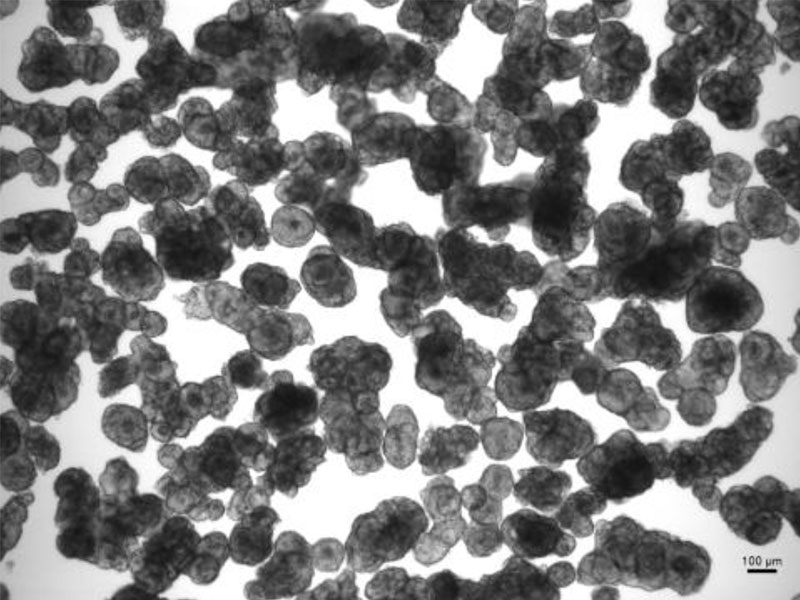
- (1)Add Trypsin-EDTA to the KUC6 cell mass suspension (Figure 1) and carefully pipette 10 times.
- (2)Incubate for 10 minutes, then carefully pipette 100 times.
- (3)Add 10 µg/ml of DNase I and allow to stand for one minute.
- (4)Apply hydrophilic treatment to the CELLNETTA. *
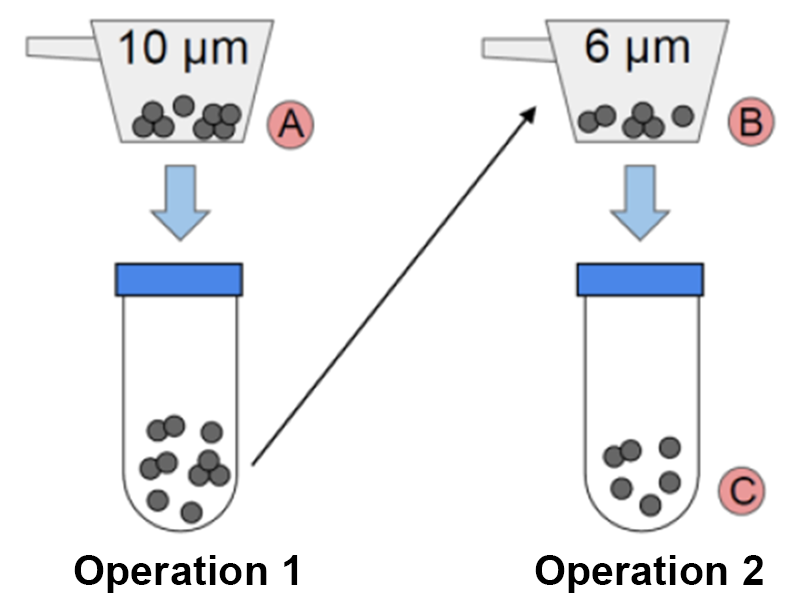
- (5)Pour the cell suspend through a 10 µm mesh CELLNETTA (Figure 2, Operation 1).
- (6)Pour the flow-through through a 6 µm mesh CELLNETTA and recover the single-cell suspension (Figure 2, Operation 2).
* For more information, please refer to the “Hydrophilic Treatment Manual“ in the CELLNETTA User Guide.
Results
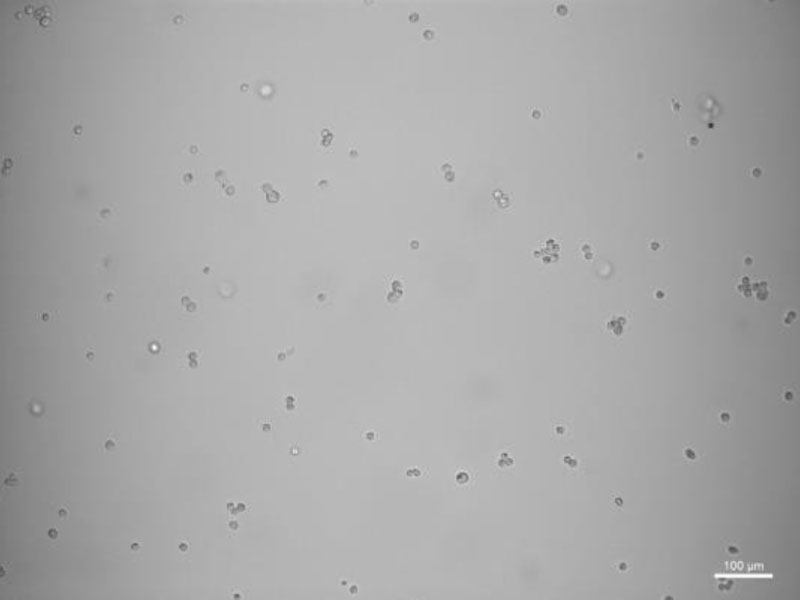
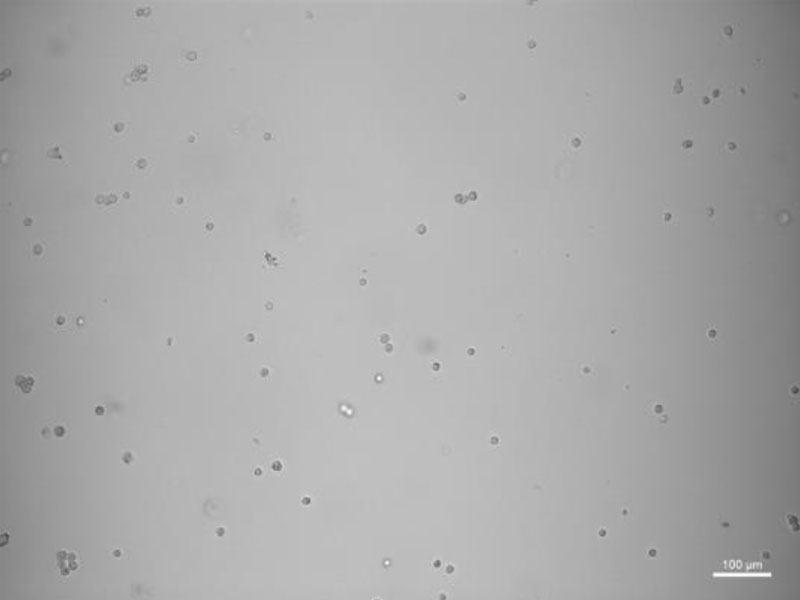
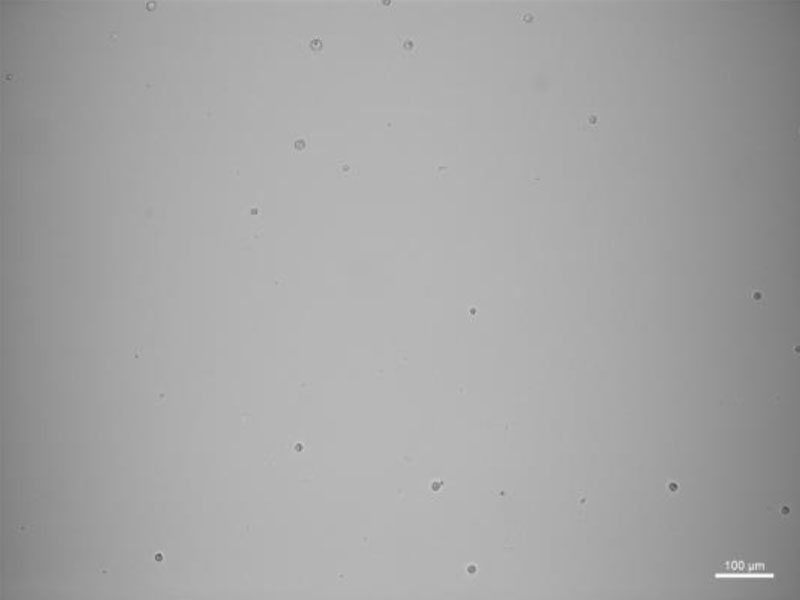
As shown in the micrographs (Figure 3) for each fraction (A to C) in Figure 2, solely performing the usual pipetting after the addition of Trypsin leaves a considerable amount of aggregated cells. However, as operations progress using CELLNETTA, the number of aggregated cells decreases and the number of single cells increases.
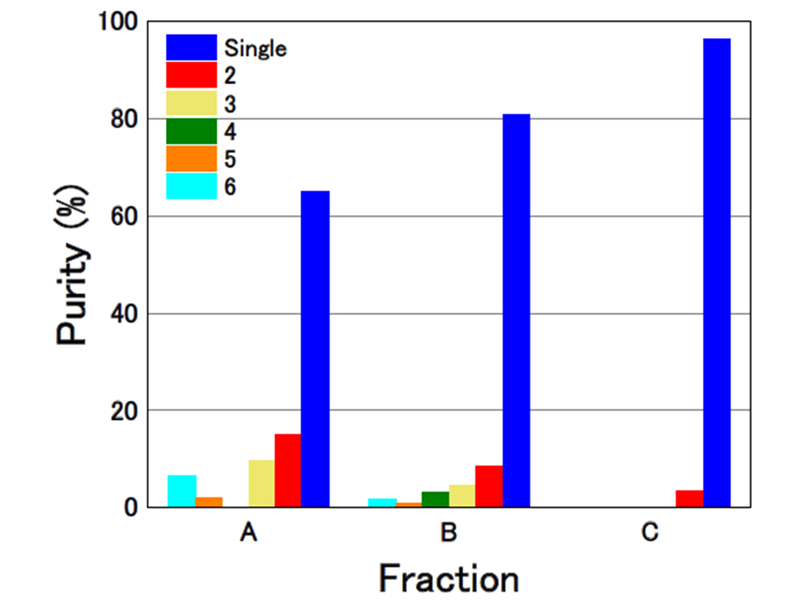
Figure 4 shows the results of the ImageJ analysis of micrographs images in order to clarify the composition of each fraction. Each colored bar chart indicates the number of cells that comprise the aggregated cells.
The vertical axis indicates
The ratio of aggregated cells relative to the total number of aggregated cells in each fraction. As shown in Figure 4, it was confirmed that single-cell suspensions with a purity of 96 % or higher could be recovered in Fraction C by using CELLNETTA.
These results indicate that operations using CELLNETTA can fractionate single cells and aggregated cells with high accuracy.
Product used in this application note
| Pore size | Gamma Irradiation | Package Quantity | Product number (P/N) |
|---|---|---|---|
| 6 µm (custom made) | Gamma Irradiated | 1 | Please contact us. |
| 10 µm | Gamma Irradiated | 1 | MZM1B010B50GA |
| 5 | MZM1B010B50GB |
Notes
- ●This product is not a medical device.
- ●This product is a sample for evaluation purpose.
- ●Please do not ship out your completed product with the sample.
- ●We shall not be liable for any claims on the sample in case it is shipped out to the market.
CELLNETTA Details
For purchasing inquiries, click here. For product inquiries, click here.
This product is single-use only.
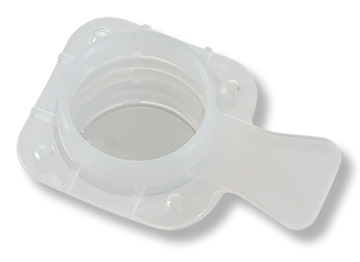
- Compatible with 50 mL centrifuge tubes
- Individually packaged
- Made in Japan
- Gamma irradiated
| Size compatible with 50 mL centrifuge tubes | |||
|---|---|---|---|
| Pore Size (μm) | Package Quantity | Part Number | Application Examples |
| 5 | 1 | MZM1B005B50GA | Purification of culture medium from cell suspensions Removal of red blood cells from whole blood/PBMC |
| 5 | MZM1B005B50GB | ||
| 10 | 1 | MZM1B010B50GA | Purification of single cells |
| 5 | MZM1B010B50GB | ||
| 15 | 1 | MZM1B015B50GA | Fractionation of clusters and single cells |
| 5 | MZM1B015B50GB | ||
| 20 | 1 | MZM1B020B50GA | Fractionation of clusters and single cells |
| 5 | MZM1B020B50GB | ||
| 100 | 1 | MZM1B100B75GA | Spheroid size-based sorting for drug efficacy testing |
| 5 | MZM1B100B75GB | ||
| 200 | 1 | MZM1B200B75GA | Fractionation of microcarrier beads Spheroid size control |
| 5 | MZM1B200B75GB | ||
*We recommend selecting a pore size slightly smaller than the target cells. Please contact us for guidance on selecting the optimal pore size for your application.
*Flow behavior may vary depending on cell morphology, flow conditions, and other factors.