
CELLNETTA was used to selectively extract target cells from a cell suspension during drug substance preparation. A method was developed for complete fractionation of lymphocytes and monocytes.
CELLNETTA MZM1 Series Cell Fractionation Filter
Precise pore sizes enable fast, highly accurate cell fractionation Ideal for a wide range of life science applications,
including regenerative medicine and cancer research
Product features
- Fast, simple operation with no equipment required
- Suitable for a wide range of applications, including cell fractionation (separation and sorting), fluid exchange, filtration, and cell recovery
- Wide selection of precise pore sizes starting from 5 µm
- Highly precise cell size-based sorting
Other Contents of Cellnetta
Non-medical
device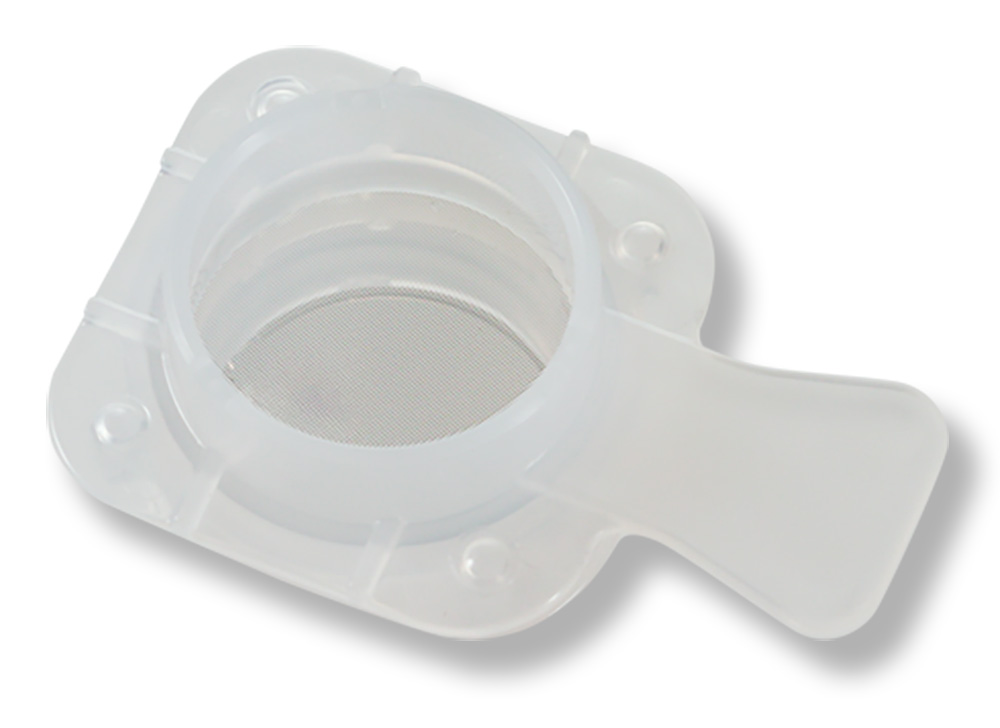
device
Research and analytical workflows increasingly demand greater efficiency, yet several challenges remain:
- ・Difficulty isolating specific cell populations with high purity
- ・Insufficient fractionation using low-speed centrifuges, leading to reduced data quality
- ・Cell stress and damage during separation
- ・Reduced throughput due to filter clogging
- ・Limited access to skilled operators for advanced equipment
The CELLNETTA MZM1 series addresses
these challenges.

CELLNETTA MZM1 Series Product Overview
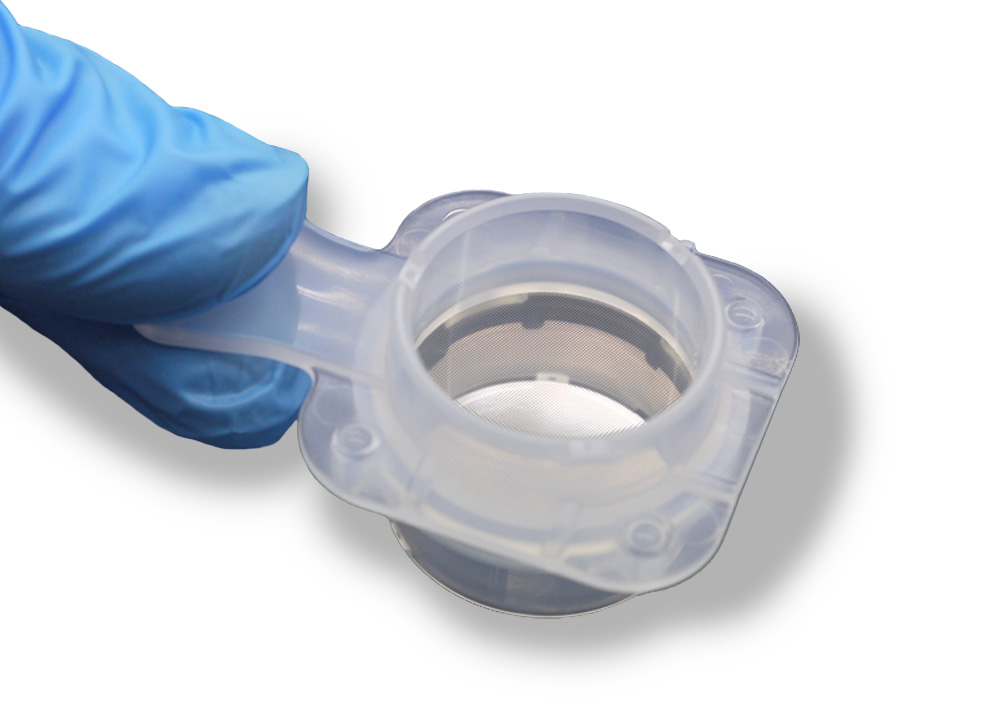
CELLNETTA is a cell fractionation filter featuring a highly precise mesh structure
Simply pour a cell suspension through the filter to achieve rapid, high-precision fractionation, concentration, and filtration. No complex equipment is required, and cell damage is minimized. Compared with conventional methods such as cell strainer filtration and density gradient centrifugation, CELLNETTA significantly reduces processing time.
It supports more efficient workflows in regenerative medicine, cell therapy, and drug discovery, where precise handling of living cells is critical.
Key Applications of CELLNETTA
CELLNETTA supports a wide range of life science applications, including regenerative medicine, cancer research, and drug discovery. Typical uses include iPS cell establishment, stem cell isolation, and single-cell analysis.
By improving both efficiency and precision in living cell processing and analysis, it helps advance R&D and enhance the quality of cell-based products.
Precise pore sizes enable selective isolation of target cells, allowing efficient separation even from limited or rare samples.
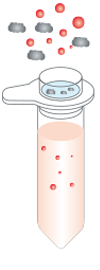
- Filtration
- ・Contaminant removal
- ・Microcarrier bead removal
- ・Serum removal
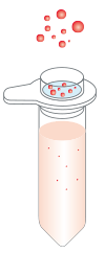
- Size sorting
- ・Lymphocyte isolation
- ・iPS cell establishment
- ・Preprocessing for single-cell analysis (separation of single cells and clusters)
- ・Spheroid size-based sorting and concentration
- ・Observation of retained cells
Retained cells can also be recovered by inverting the filter and rinsing.
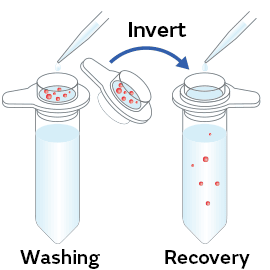
- Washing & recovery
- ・Fluid exchange
- ・Media exchange
- ・Cell washing
- ・Concentration of cell suspensions etc.
CELLNETTA Application Examples ─ Explanatory Videos
Example 1: Drug Substance Preparation ─ Complete Fractionation of Lymphocytes and Monocytes
Example 2: Preprocessing for Single-Cell Analysis — Removal of Red Blood Cells and Debris
As an alternative to density gradient centrifugation and other preparation methods, CELLNETTA with various pore sizes was used for cell fractionation. Red blood cells and debris were removed from cell suspensions quickly and easily.
Accurate size-based sorting of individual cells is expected to improve data quality in single-cell analysis.
CELLNETTA Advantages: Fractionation Precision and Processing Speed
Common cell fractionation methods include antibody-based separation using cell sorters or magnetic beads, density-based separation using centrifuges, and filtration using cell strainers or membrane filters.
By leveraging subtle differences in cell size, CELLNETTA introduces a new approach that combines high-precision fractionation with operational simplicity—something that has been difficult to achieve with conventional methods.
As shown in the graph comparing flow-through time with a membrane filter, CELLNETTA enables rapid processing without the need for pressurization or vacuum.

How to Use CELLNETTA
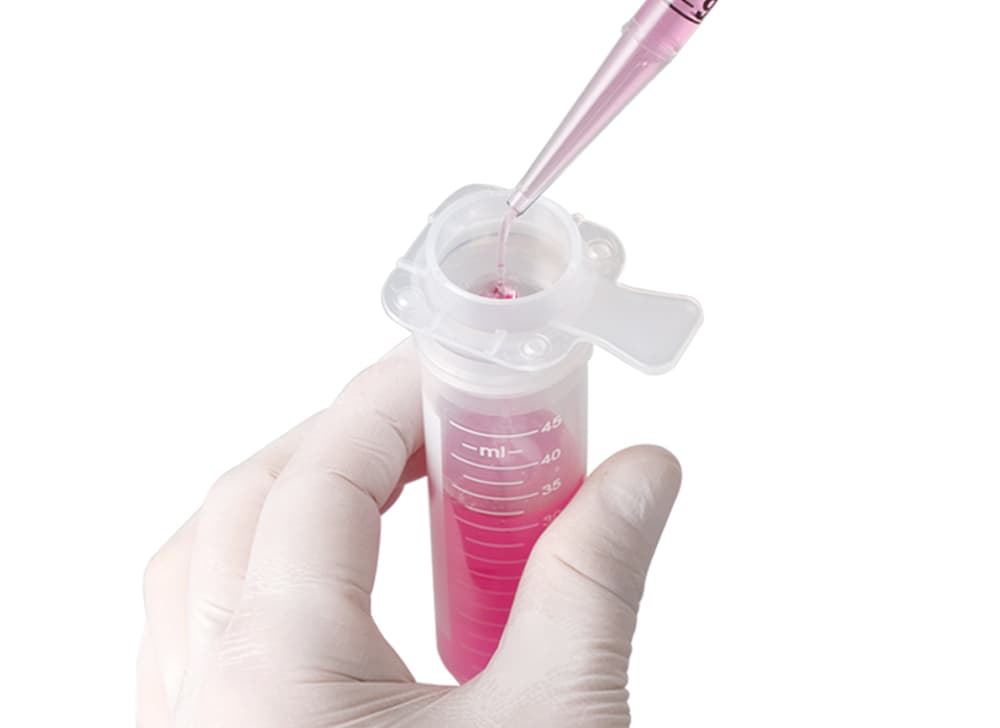
Simply pour a cell suspension into CELLNETTA to separate cells by size.
*Hydrophilic treatment prior to use is recommended.
①Set on a centrifuge tube
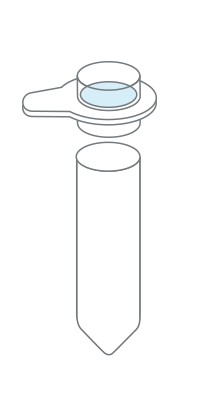
Place CELLNETTA on a 50 mL centrifuge tube.
②Pour in the cell suspension
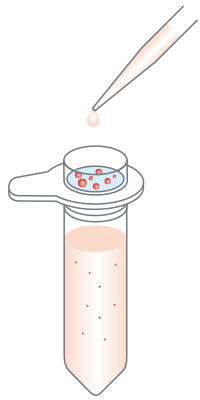
Hold the centrifuge tube upright and apply the sample evenly across the entire filter surface.
③Separation is complete
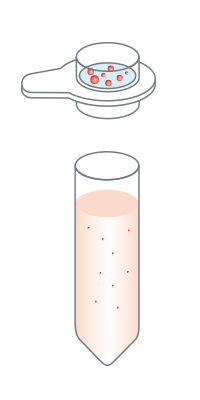
Small cells and culture medium that pass through CELLNETTA are collected in the centrifuge tube.
・Contaminant removal
・Microcarrier bead removal
・Serum removal
・Preprocessing for single-cell analysis
(separation of single cells and clusters)
・Spheroid size-based sorting and concentration
・Observation of retained cells
④Recovery — operation complete
Invert CELLNETTA and recover the retained cells from the filter.
・Fluid exchange
・Media exchange
・Cell washing
・Concentration of cell purifying-medium-from-cell-suspensions
CELLNETTA Details
For purchasing inquiries, click here. For product inquiries, click here.
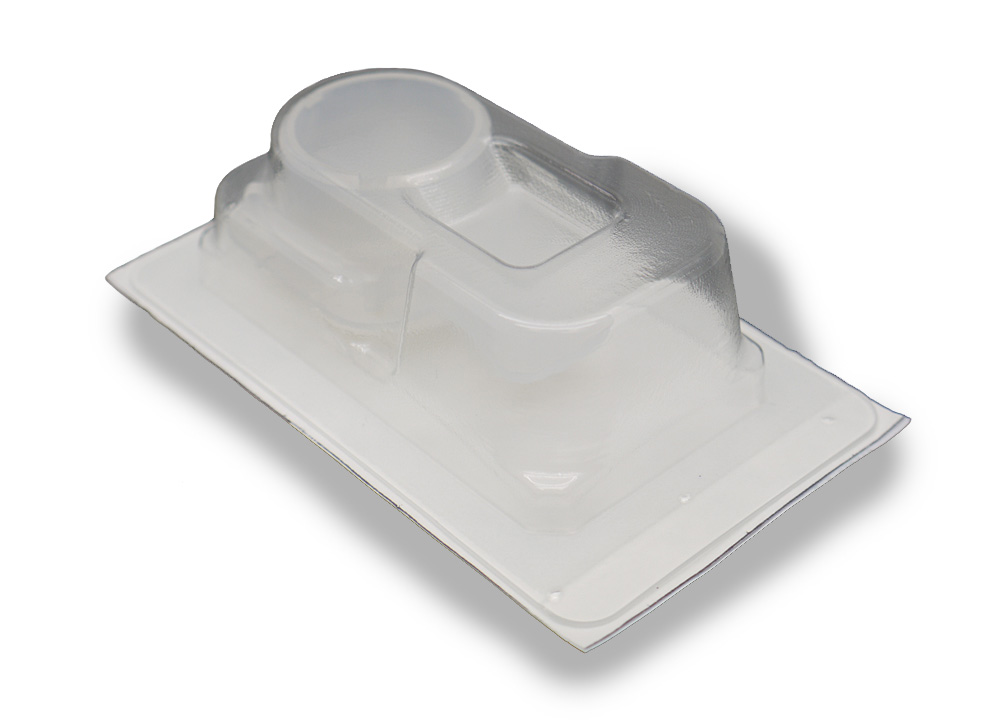
This product is single-use only.
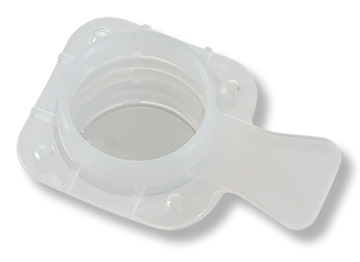
- Compatible with 50 mL centrifuge tubes
- Individually packaged
- Made in Japan
- Gamma irradiated
Please flick to check
| Size compatible with 50 mL centrifuge tubes | |||
|---|---|---|---|
| Pore Size (μm) | Package Quantity | Part Number | Application Examples |
| 5 | 1 | MZM1B005B50GA | Purification of culture medium from cell suspensions Removal of red blood cells from whole blood/PBMC |
| 5 | MZM1B005B50GB | ||
| 10 | 1 | MZM1B010B50GA | Purification of single cells |
| 5 | MZM1B010B50GB | ||
| 15 | 1 | MZM1B015B50GA | Fractionation of clusters and single cells |
| 5 | MZM1B015B50GB | ||
| 20 | 1 | MZM1B020B50GA | Fractionation of clusters and single cells |
| 5 | MZM1B020B50GB | ||
| 100 | 1 | MZM1B100B75GA | Spheroid size-based sorting for drug efficacy testing |
| 5 | MZM1B100B75GB | ||
| 200 | 1 | MZM1B200B75GA | Fractionation of microcarrier beads Spheroid size control |
| 5 | MZM1B200B75GB | ||
*We recommend selecting a pore size slightly smaller than the target cells. Please contact us for guidance on selecting the optimal pore size for your application.
*Flow behavior may vary depending on cell morphology, flow conditions, and other factors.
Frequently Asked Questions about CELLNETTA
Click here to view frequently asked questions about CELLNETTA.